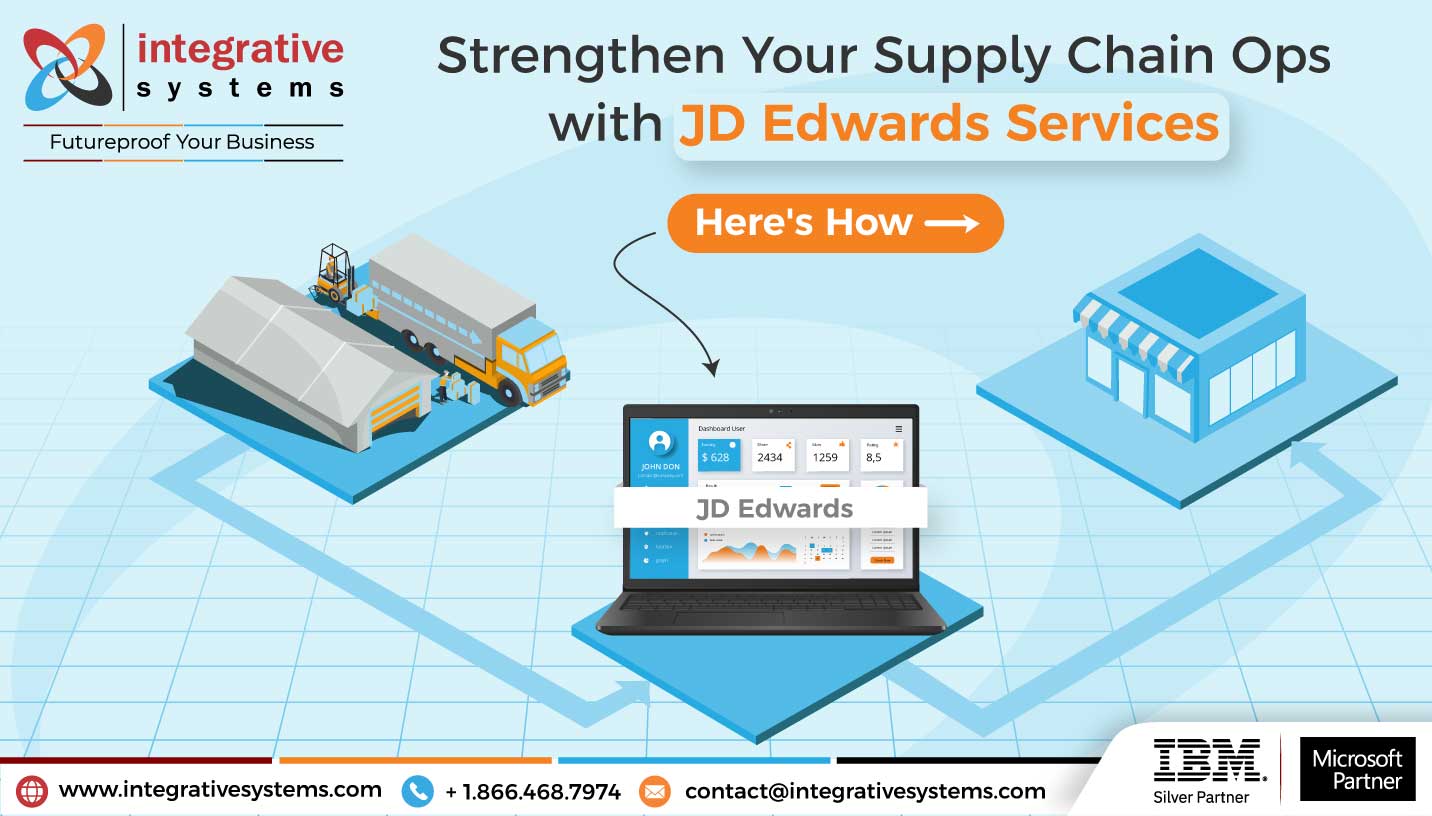
Through JD Edwards services, JDE experts help you optimize supply chain planning by aligning planning, inventory, procurement, integrations, and automation with emerging business operations.
Through JD Edwards support services, JDE consulting services, and continuous optimization, they help improve supply chain visibility, operational efficiency, and decision-making across connected systems.
Worldwide supply chain technology spending is projected to reach nearly $30 billion, as organizations continue investing in technologies that improve planning, visibility, and operational resilience.
~ According to Gartner.
For organizations running JD Edwards EnterpriseOne, this reinforces the need to continuously align supply chain planning with emerging operational demands, not just maintain the ERP environment.
7/10 JDE users that we spoke to confirm that JD Edwards services become more relevant when their supply chain operations expand across locations, systems, and partners.
With consistent MRP and DRP cycles, order flows, and inventory updates, most JD Edwards E1 environments operate as configured.
How closely planning adapts with routine operations is what matters the most.
And that’s where JD Edwards support experts help streamline –
- Planning signals moving smoothly into procurement decisions
- Inventory data aligning across locations and systems
- Coordination across planning, inventory, and procurement workflows
- Decisions across supply chain
The structure stays the same. What evolves is how well it stays aligned with your supply chain.
Still thinking if JD Edwards services is an investment worth making?
Today, we’re going to discuss –
- Why supply chain planning matters in JDE environments
- How JDE services strengthen supply chains
- What you gain with reliable JDE support
Without any further ado, let’s get started!
Why Supply Chain Planning Matters with JDE E1
Through supply chain planning with JD Edwards services, our JDE experts align planning, inventory, and procurement across multi-site operations.
With JD Edwards EnterpriseOne, demand signals move into execution, supporting –
- Inventory optimization and working capital efficiency
- Procurement aligned with current demand signals
- Connected visibility across planning, inventory, and orders
- Consistent execution across distributed supply chains
Through JD Edwards support services, integration services, and managed services, planning stays aligned with evolving supply chain needs.
Modern supply chains extend across suppliers, warehouses, logistics partners, and customers.
Planning starts to depend more on correct data, aligned processes, and real time visibility with connected operations. JD Edwards experts help align your supply chain planning with changing operational realities
Let’s see how supply chain planning for JDE EnterpriseOne 9.2 looks in practice.
| Supply Chain Function | How JD Edwards Services Help |
| Demand Planning | Align MRP & DRP cycles with changing demand patterns |
| Inventory Management | Improve inventory visibility and data consistency across locations |
| Procurement | Synchronize planning outputs with purchasing workflows |
| System Integration | Connect JD Edwards with WMS, logistics, supplier, and third-party systems |
| Workflow Automation | Automate repetitive supply chain processes through Orchestrator |
| Operational Continuity | Optimize system performance, batch jobs, and transaction processing |
Planning that Adapts to Evolving Demand Cycles
Planning in JD Edwards still revolves around MRP and DRP.
That foundation remains as is.
The rhythm of MRP and DRP cycles changes as demand patterns shift.
In practice, our teams start revisiting –
- How frequently MRP runs are triggered
- How messages are reviewed and acted upon
- How planning outputs connect with procurement and production
Within JD Edwards support services and JD Edwards managed services, this often becomes an ongoing adjustment.
The structure remains the same. The timing evolves.
Inventory Alignment Across Operational and Financial Layers
Inventory in JD Edwards sits across both operational and financial layers.
Transactions update F41021, while financial entries move through F0911.
As transaction volumes increase and inventory movement span multiple locations, attaining real time supply chain visibility becomes more relevant.
Through JD Edwards database support services, our teams spend time on –
- How inventory transactions are posted and reflected
- How well DMAAI configurations match item and GL behavior
- How data resides across sub-ledger and general ledger
This determines how your inventory reflects planning, finance, and operations.
Procurement Workflows that Grow with Operational
In JD Edwards E1, the procurement workflow follows a structured approval and purchasing process.
These workflows involve more layers such as approvals, supplier coordination, and policy alignment as your business grows.
Within JD Edwards integration services and JD Edwards managed services, our teams work around –
- Structuring approval flows that reflect organizational hierarchies
- Aligning purchase order processing in F4311 with planning outputs
- Integrating our JDE E1 with supplier systems and external platforms
JD Edwards Orchestrator can be used to automate routine procurement actions, trigger workflows based on defined business events, and integrate JDE E1 with supplier and external platforms.
In most JD Edwards EnterpriseOne environments, this is about ensuring how existing flows support how decisions are made today.
Data Flow Across Connected Supply Chain Systems
Your JDE EnterpriseOne continuously interacts with warehouse systems, logistics platforms, and partner/supplier systems.
As these connections expand, consistency in how data moves become more noticeable.
Through JD Edwards integration services using AIS, BSSV and REST APIs, our teams focus on –
- How data flows between JD Edwards and external systems
- How updates reflect across locations and platforms
- How information becomes available across the supply chain
Through JD Edwards software services and integration services, our JDE experts strengthen connected supply chain visibility in day-to-day operations.
Let’s understand how JD Edwards services providers strengthen your supply chain.
“Supply chain planning isn’t static. As operations expand across locations, partners, and systems, JD Edwards must continuously evolve to keep planning, inventory, and procurement working in sync. That’s where the right mix of support, integration, and automation services creates lasting business value.”
~ Colin Galdo | Engagement Manager – JD Edwards, Integrative Systems.
How JD Edwards Services Strengthen Supply Chain Execution
Through JD Edwards services, our JDE experts shape how your supply chain processes move across planning, inventory, procurement, and execution.
This includes synchronizing system behavior with operational timelines through –
- JD Edwards support services for UBE scheduling, performance tuning, and transaction flow
- JD Edwards integration services using AIS, BSSV, and REST APIs for system connectivity
- JDE automation services to enable event-driven workflows through Orchestrator
- JD Edwards managed services for continuous monitoring and system alignment
Together, these services ensure that your supply chain execution remains coordinated across systems and processes.
Our JDE experts help you improve planning accuracy, inventory visibility, and coordination across connected systems. The goal is to build more resilient supply chain operations.
JD Edwards Support Services for Operational Continuity
A large part of supply chain execution depends on batch processing in JD Edwards.
MRP runs, order updates, and inventory postings move through UBEs and queues. These jobs are set up early and continue running the same way for years.
Your team starts revisiting how those jobs behave when transaction volume grows.
Within JD Edwards support services, our CNC administrators take care of –
- How are UBE jobs scheduled around MRP and order cycles
- What happens with the queues when volumes increase
- How F4211 and F4311 tables are updated during peak activity
This includes some small adjustments such as timing changes, queue balancing, and resource allocation.
Over time, they affect how smoothly planning outputs move into execution.
That’s typically how JD Edwards managed services enhance your day-to-day operations.
JD Edwards Integration Services for Connected Supply Chains
Supply chain data rarely stays within JD Edwards.
Warehouse systems, logistics platforms, supplier tools; all of them interact with it in some way.
JD Edwards integration services usually start with standard connectors like AIS, BSSV, and APIs.
What evolves is how consistently those integrations behave across different scenarios.
For example –
Inventory updates flowing between JD Edwards (F41021) and WMS
Purchase orders in F4311 syncing with supplier systems
Shipment updates feeding into logistics platforms
In practice, our JDE experts spend time stabilizing these flows, handling retries, managing payloads, and aligning timing across systems.
As these connections settle, data begins to move more predictably across your supply chain.
JDE Automation Services for Responsive Execution
A lot of workflows in JD Edwards still depend on someone triggering the next step.
That’s where Orchestrator comes in.
Through JDE automation services, our JD Edwards developers introduce event-based flows to workflows where timing matters the most.
- Inventory replenishments could be triggered with a pre-decided threshold
- Order status change could initiate a push notification across systems
- MRP and DRP outputs could trigger procurement
These are incremental updates in the way how your workflows function in continuity.
JD Edwards Upgrade Services for Scalable Supply Chain Operations
Upgrades in JD Edwards are often planned around stability and compatibility.
They open up access to newer capabilities around integrations and performance.
Through our JD Edwards upgrade services, our teams look at –
- How batch processing performs under load
- What changes with the latest AIS and API capabilities
- How orchestration and automation can be leveraged better
Your JD Edwards E1 stays as is. It adapts around your growing supply chain ops over time.
JD Edwards Database Support Services for Data Consistency
Most supply chain decisions in your JD Edwards depend on data that moves across multiple tables.
Inventory in F41021. Orders in F4211. Financial entries in F0911.
Our JDE database experts ensure these data entries are consistent, updated, and available at the right time.
Our JD Edwards database support services involve –
- Reviewing how transactions are posted
- Mapping update cycles across modules
- Ensuring data is available when and where it’s needed, at the right time
This helps you build confidence in your data while making decisions.
Now, let’s look at what changes with a reliable JD Edwards solutions provider.
What Changes with Reliable JD Edwards Support for Supply Chain Planning
Reliable JD Edwards support brings greater coordination to supply chain planning by connecting planning decisions with real demand, inventory movement, procurement actions, and execution. The impact is visible across teams and workflows:
- Planning decisions reflect current demand and supply conditions
- Inventory visibility improves across locations and movements
- Procurement actions align with planning signals and supplier timelines
- Execution stays connected across systems and processes
- Planning decisions rely on consistent, reliable JDE system data
With JD Edwards support, integration, and automation services, supply chain teams can keep planning, inventory, procurement, and execution moving in closer coordination – while responding more effectively to changing operational conditions.
Planning Moves with Demand
For planners, most of the day still revolves around MRP and DRP.
Runs generate messages. Recommendations come through. Adjustments are made.
What shifts is how quickly those outputs turn into action.
- MRP messages don’t sit as long waiting for review
- Supply suggestions move into F4311 purchase orders or production decisions with fewer handoffs
- Planning teams start spending less time interpreting exceptions, and more time shaping supply decisions based on current demand
In environments where JD Edwards services support MRP and DRP scheduling and message flows, planning no longer remains a batch-driven activity.
Inventory Reflects What the Warehouse Sees
Warehouse teams are aware of the movements before the system reflects.
Receipts come in. Transfers happen. Adjustments are made on the floor.
Inventory movements reflect in table F41021. But often at the same time across locations.
With JD Edwards support services and JD Edwards database support services –
- Inventory updates reflect consistently across locations
- Batch jobs & UBEs process movements in stricter timelines
- Data is made available earlier for effective planning & order fulfillment
Your warehouse teams save time by not having to validate whether system records reflect the actuals. Your planning and procurement teams now work on the exact same inventory data, with no need for reconciliation.
Procurement Acts on Current Signals
Procurement teams must keep up with planning outputs and supplier realities.
They work with –
- Purchase orders in F4311
- Supplier lead times
- Commitments that shift as demand changes
Through JD Edwards integration services, our JDE experts integrate planning outputs with supplier systems –
- Purchase orders reflect updated, real-time demands
- Supplier confirmations match with current requirements
- Modifications in planning move into procurement without delay
Your procurement teams are now empowered to focus more on working with suppliers to meet needs, as they save time spent manually adjusting orders.
Execution Feels More Connected Across Systems
Across operations, execution usually spans more than one system.
Your JD Edwards handles core transactions. Other systems manage warehouse operations, logistics, or tracking.
With JDE automation services and integration layers working alongside each other –
- Order updates in F4211 reflect across connected systems as they progress
- Inventory movements trigger downstream updates without waiting for manual steps
- Shipment and logistics data stay in sync across platforms
Your operations teams are now relieved from the follow ups across the systems.
Finance Starts Seeing Operations Sooner
Finance often works slightly behind operations, waiting for transactions to settle before they reflect in reporting.
Entries flow through F0911, tied to inventory, procurement, and order activity.
With JD Edwards database support services and structured transaction handling –
- Financial entries align more closely with operational activity
- Reporting cycles reflect what’s happening across supply chain functions
- Variances become easier to trace back to planning or execution
Your finance teams now have a clearer connection between operational activity and financial outcomes.
Decisions Happen without Friction
The biggest shift shows how decisions move.
Planners rely on MRP outputs without repeated validation. Warehouse teams trust what the system reflects. Procurement acts on current signals. Finance sees operations closer to real time.
Each team still works within its function.
What changes is how they depend on each other’s data, and how easily that data holds up across the system.
JD Edwards services across support, integration, automation, and database management shape this experience gradually.
Not by changing the system itself. But by bringing its processes closer to how the supply chain actually runs.
Customer Success Story
Learn how our JD Edwards experts streamlined integrations and strengthened supply chain coordination across multiple business units.
| Supply Chain Area | Without JD Edwards Services | With JD Edwards Services |
| Planning | MRP outputs require frequent manual validation | Planning aligns more closely with current demand |
| Inventory | Visibility varies across locations | Inventory reflects consistent, real-time movement |
| Procurement | Purchasing reacts after planning | Procurement moves with planning signals |
| Integrations | Connected systems require ongoing manual intervention | Data flows consistently across connected platforms |
| Automation | Workflows depend on manual triggers | Orchestrator enables responsive execution |
| Decision-Making | Teams work from disconnected information | Planning, operations, and finance act on aligned data |
Why Integrative Systems for JD Edwards Services
Your supply chains keep evolving.
Planning cycles emerge. Inventory moves across locations. Procurement connects with more partners and systems.
What matters is how consistently your JD Edwards stays aligned with these moving parts.
At Integrative Systems, our focus remains on that alignment.
Our teams work alongside yours, across planning, inventory, procurement, and execution to understand how your supply chain operates, and how JD Edwards needs to support it.
- Our business analysts stay close to your operational workflows
- Our JD Edwards developers translate those into system capabilities
- Our JDE integration specialists ensure data moves consistently across connected systems
This keeps your JD Edwards EnterpriseOne working in step with your supply chain, supporting how decisions move across planning, inventory, and procurement.
We operate as an extension of your team, staying involved as your processes evolve, your systems expand, and your supply chain grows more connected.
To take this further, we’re offering a complimentary JD Edwards CNC assessment.
It gives you a clear view of how well your current environment supports your supply chain operations, and where alignment can be strengthened as your business scales.
As a JD Edwards services provider, our goal is to help you succeed first. If you are looking for a partner who will be personally invested in your success, drop us a line at contact@integrativesystems.com and our team will get back to you within 2 business days.
FAQs for JD Edwards Services
1. What does a JD Edwards Managed Services Cover in Supply Chain?
Through our JD Edwards managed services, our team reviews MRP and DRP cycles across locations, align batch jobs with operational timelines, and ensure integrations with external systems hold up when transaction volumes fluctuate.
2. How do JD Edwards Experts Integrate WMS and Supplier Platforms?
Our JDE integration experts use AIS, BSSV, and REST APIs to connect your EnterpriseOne with warehouse systems, logistics tools, and supplier platforms. They also monitor and optimize these integrations for data to flow without delays and mismatches.
3. How does a JD Edwards Support Team Improve Planning & MRP Execution?
Our teams look at UBE schedules, message processing, and how quickly MRP signals move into procurement or production decisions. Small adjustments there enhance how smoothly planning cycles translate into execution.
4. What does JD Edwards Database Support Cover for Better Inventory & Financial Alignment?
Through JD Edwards database support services, our team focuses on how transactions are processed, how DMAAI configurations behave, and how data settles across operational and financial tables. That’s where alignment between inventory movement and financial reporting starts becoming more consistent.
5. How do JDE Automation Experts Support Real-time Supply Chain Execution?
As a part of our JDE automation services, our automation experts leverage Orchestrator to configure flows that respond to system activities like inventory thresholds, order updates, or planning outputs. With this, your processes no longer must wait for manual triggers to move forward.
6. How do JD Edwards Services Improve Supply Chain Planning?
JD Edwards services improve supply chain planning by aligning demand planning, inventory, procurement, integrations, and automation with current business operations. This helps organizations make faster decisions, improve inventory visibility, and strengthen supply chain coordination.
7. When should I Invest in JD Edwards Services for Supply Chain Planning?
Organizations should consider JD Edwards services when expanding supply chain operations, integrating multiple systems, improving planning accuracy, automating workflows, or strengthening inventory and procurement processes across locations.
8. How can You Help Improve Supply Chain Visibility through JD Edwards Services?
Through JD Edwards services, our experts help align planning, inventory, procurement, and connected systems. They enable accurate decisions through consistent, real-time operational data.
9. What are JD Edwards services?
JD Edwards services include support, consulting, integrations, managed services, upgrades, automation, and continuous optimization to help you improve the performance and business value of your JD Edwards EnterpriseOne environment.